Retrofitting solar often begins with a practical question: why is AC coupling better than DC coupling for retrofitting solar? The answer usually starts with the equipment already installed. An AC-coupled battery can connect beside an existing solar inverter, rather than forcing homeowners to replace a functioning system. That can reduce downtime, simplify installation, and preserve familiar monitoring hardware. Sometimes, the simplest path wins.
Paul Denholm, a respected energy-storage researcher at the National Renewable Energy Laboratory, has stated, “Storage is valuable because it can provide multiple services.” That idea shapes this guide. AC coupling can add backup power, time-of-use savings, peak-demand control, and improved solar utilization. It also offers flexibility when the original PV inverter still has years of service remaining. However, it is not automatically superior. Additional AC-to-DC and DC-to-AC conversions may reduce round-trip efficiency, especially during frequent charging cycles. The battery location, inverter limits, electrical-panel capacity, and local interconnection rules also matter.
These seven tips examine the real retrofit decisions behind AC coupling. They consider installation complexity, backup performance, system expansion, clipping, controls, maintenance, and long-term cost. A shaded garage, a long cable run, or an undersized main panel can change the outcome. Good design is rarely just about choosing AC or DC. It depends on measurements, load profiles, equipment compatibility, and honest assumptions. Some projects may still favor DC coupling. That is the part worth questioning.
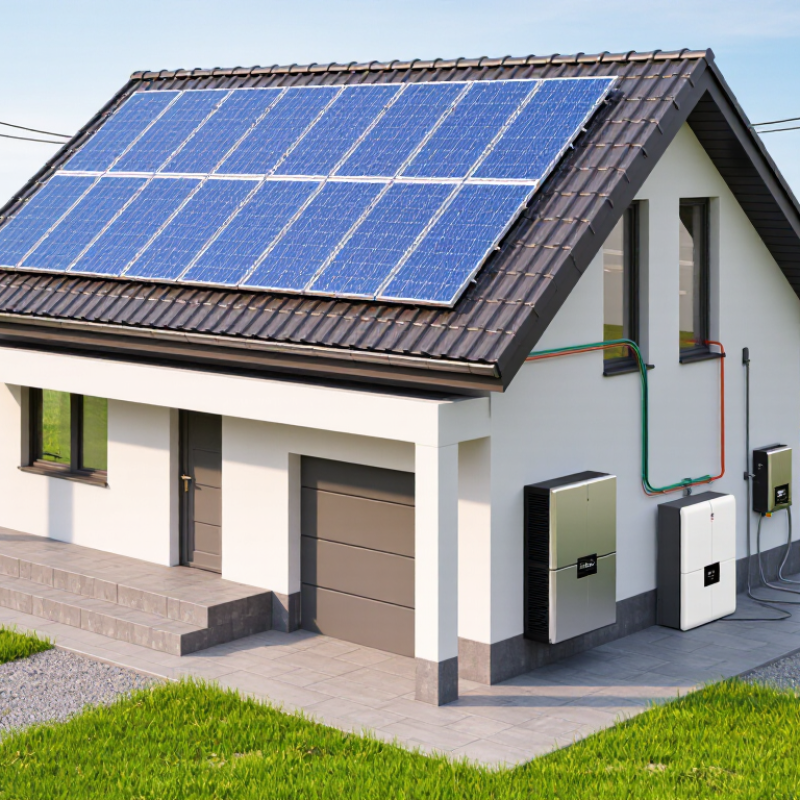
7 Tips Why AC Coupling Beats DC Coupling for Retrofits?
Retrofit Baseline: AC vs. DC Paths and the DOE’s 85–95% Efficiency Range
AC coupling often fits existing buildings more cleanly. The inverter connects on the AC side, near the current distribution panel. This can reduce rewiring, wall openings, and installation time. It also supports phased upgrades when the original solar equipment remains operational. In retrofit assessments, I check panel capacity, cable routes, protection devices, and shutdown procedures before choosing a path. Small details matter. A crowded panel can erase expected savings.
The DOE’s 85–95% efficiency range offers a useful retrofit baseline, not a guaranteed result. AC paths may lose energy through repeated inverter conversions, especially during low-load operation. DC coupling can reduce conversion steps when new generation and storage are designed together. Yet existing equipment may require costly replacements, control changes, or additional safety hardware. That weakens the theoretical advantage. Measured round-trip efficiency, standby consumption, shading, battery temperature, and daily load patterns deserve attention. Ask for test data under realistic conditions. Marketing estimates can feel too clean. My own preference is cautious: choose AC coupling when compatibility and installation risk dominate, but use DC coupling when the system is being redesigned as one coordinated unit. A site-specific calculation remains essential.
A retrofit should respect the equipment already earning its place on the roof. Many PV inverters operate for roughly 10–15 years, so replacing healthy units can create unnecessary cost and disruption. AC coupling lets new battery equipment connect on the alternating-current side. Existing PV inverters can keep their familiar wiring, protection settings, and monitoring paths.
That matters on a real site. A 12-year-old inverter may still perform reliably, even with dust around the cabinet and slightly faded labels. NREL’s long-term PV degradation analysis reported a median module degradation rate near 0.5% annually. The modules may still have useful output when the inverter reaches replacement age. Industry reliability studies from IEA PVPS also identify inverters as key balance-of-system components requiring careful lifecycle planning.
The practical gain is less rewiring and fewer roof penetrations. It can also shorten commissioning work. Not always, though. Older inverters may lack modern grid-support functions or communicate poorly with new controls. That weakness deserves honest attention. Engineers should review fault records, firmware, protection settings, and remaining warranty coverage before approving the design. A field inspection often reveals more than a spreadsheet. Keeping existing inverters is sensible only when their measured performance supports the decision.
AC coupling allows a battery system to be added without immediately replacing the existing PV inverter. The chart uses the midpoint of the commonly cited 10–15-year PV inverter service-life range to estimate the remaining service life preserved at different retrofit ages.
Illustrative lifecycle model based on a typical PV inverter service life of 10–15 years. Actual replacement timing depends on equipment condition, operating environment, maintenance, and system design.
AC coupling makes storage easier to add without replacing a working solar inverter. For a home, a 5 kWh battery can shift evening cooking, lighting, and cooling loads. The system should match real consumption, not an optimistic spreadsheet. A smart meter and several weeks of load data provide a stronger starting point.
Small modules also support staged investment. One household may begin with 5 kWh, then add another unit after observing winter demand. Each module needs compatible voltage ranges, communication controls, and clear installation spacing. Poor cable sizing can create heat, losses, and unnecessary maintenance. That detail is easy to underestimate.
At commercial sites, the same principle scales toward hundreds of kilowatt-hours or multi-MWh plants. Engineers can place battery cabinets near existing switchgear while keeping generation equipment in service. They must verify protection settings, fault levels, ventilation, fire separation, and emergency access. Independent testing remains essential before expansion.
The less visible issue is software coordination. Solar production, battery limits, demand charges, and backup reserves must follow one operating plan. A control error can reduce savings, even when the hardware is correctly sized. Modular storage is flexible, but flexibility is not automatic. Site conditions still decide whether the design performs well.
7 Tips Why AC Coupling Beats DC Coupling for Retrofits?
Step 3: Use AC-Side Expansion to Avoid Full PV Rebuilds in 2024–2030 Retrofits
AC-side expansion can preserve a functioning PV array during a retrofit. The existing modules, wiring, and mounting structure stay in service. A new inverter connects on the building’s AC distribution side. This approach can reduce roof work, downtime, and replacement waste.
Start with a field inspection, not a spreadsheet. Check inverter age, voltage limits, protection devices, cable condition, and available switchgear capacity. Review hourly load data from the last twelve months. A larger system is not automatically better. Export limits and peak demand may restrict the useful size.
The design should separate old and new generation clearly. Label circuits, document shutdown procedures, and confirm that protection settings match the expanded system. Battery integration may improve evening usage, but it adds control and commissioning complexity. Keep testing records.
Real sites rarely match drawings.
From 2024 to 2030, equipment availability may change faster than project schedules. Leave space for future protection upgrades and communications hardware. An experienced electrician should verify the interconnection before procurement. I have seen retrofit plans fail because a small distribution board became the hidden bottleneck. AC coupling avoids a full PV rebuild, but only when the existing system is genuinely serviceable. That assumption deserves a second inspection.
| Retrofit Tip | Existing PV Asset | AC-Side Expansion | Typical DC Rebuild Requirement | Indicative Construction Duration | PV Hardware Replaced | Main Benefit |
|---|---|---|---|---|---|---|
| 1. Add storage at the point of interconnection | 500 kWac PV / 625 kWp DC | 250 kW / 500 kWh battery inverter connected to the AC bus | DC battery integration, revised string design, and possible replacement of PV inverters | AC expansion: 1–3 weeks DC rebuild: 4–10 weeks |
Usually limited to protection, metering, switchgear, and controls | Preserves the operating PV field while adding dispatchable capacity |
| 2. Keep the existing PV inverters when electrically compatible | 10–15 year-old central or string inverter fleet | Independent battery PCS operates in parallel with existing PV inverters | New DC/DC interfaces or replacement inverters to create a shared DC bus | AC expansion: 5–15 working days of site work | No routine replacement of functioning PV inverters | Reduces stranded value in serviceable PV equipment |
| 3. Use AC-side expansion to avoid a full PV rebuild | PV array remains mechanically sound with acceptable insulation, connectors, and module performance | Battery system, bidirectional inverter, step-up transformer, and protection added downstream of the PV conversion stage | Module rewiring, DC combiner changes, inverter replacement, and possible tracker or cable modifications | AC expansion: 1–4 weeks Full DC rebuild: 2–6 months |
Often less than 10% of the installed PV hardware, subject to inspection results | Shorter outage window and lower construction risk |
| 4. Match the battery inverter to the available AC headroom | 500 kWac interconnection with 100–150 kW of unused export capacity | 100–150 kW battery inverter can charge during export-limited periods or discharge when the feeder has capacity | Additional DC capacity may require a new inverter block, transformer, and interconnection study | Typically avoids major medium-voltage equipment changes | Usually limited to the new battery block and associated balance of plant | Uses existing grid capacity more efficiently |
| 5. Minimize PV production downtime | Operating solar plant with a planned annual availability target of 98% or higher | Battery equipment is installed and commissioned in parallel with normal PV operation where permitted | Longer plant shutdowns may be required for DC rewiring, inverter replacement, and protection testing | Typical planned outage: 1–5 days for AC tie-in Longer outages possible for DC rebuilds |
PV modules and existing DC wiring are generally retained after testing | Protects operating revenue during construction |
| 6. Verify protection and interconnection limits before procurement | Existing transformer, switchgear, relay settings, and point-of-common-coupling limits | Review fault current, reverse power flow, anti-islanding, voltage rise, and export-control requirements | DC architecture changes can still require new AC protection and a revised utility study | Engineering review commonly takes 2–8 weeks, depending on jurisdiction and utility process | No equipment saving is assumed until the electrical study is completed | Reduces the risk of late-stage redesigns and approval delays |
| 7. Plan for 2024–2030 phased capacity growth | Existing PV retained; battery capacity may be added in stages | Initial 250 kW / 500 kWh system with expansion provision for up to 500 kW / 1 MWh, subject to interconnection limits | A full DC redesign may be needed each time PV voltage, module layout, or inverter topology changes | Phased AC additions can be scheduled during planned maintenance windows | Existing PV equipment remains in service if test results and code compliance are satisfactory | Supports staged investment as tariffs, capacity needs, and storage economics change |
A retrofit payback model should start with measured tariff intervals, not optimistic annual averages. NREL’s 2024 Annual Technology Baseline uses roughly 85% round-trip efficiency for battery storage modeling. Field results can approach 90–95% when wiring, inverter, and standby losses remain controlled. Every lost kilowatt-hour changes the result.
Assume the battery charges at $0.10 per kWh and discharges during a $0.30 peak period. At 90% efficiency, delivering 1 kWh requires about 1.11 kWh for charging. The energy margin is therefore near $0.19 before maintenance, demand charges, taxes, and degradation. Lazard’s 2024 Levelized Cost of Storage analysis also shows why efficiency and cycling frequency strongly influence storage economics. More cycles do not automatically mean faster payback.
Use twelve months of utility bills, fifteen-minute load data, and the actual export credit. Include AC conversion losses and any backup reserve. Be conservative. A 95% assumption may look attractive but can fail during hot weather or partial-load operation. I would test 85%, 90%, and 95% scenarios, then compare simple payback with discounted cash flow. The weakest case often reveals the honest answer.
It adds a new inverter on the building’s AC distribution side. Existing modules, wiring, and mounting structures remain in service. Less roof work may reduce downtime and replacement waste.
It is unsuitable when the existing PV system is unsafe, damaged, or no longer serviceable. A second inspection is wise. Old equipment can hide serious limits.
Inspect inverter age, voltage limits, protection devices, cable condition, and switchgear capacity. Review twelve months of hourly load data. Real sites rarely match drawings.
A small board may lack capacity for the expanded system. Export limits and peak demand can restrict useful system size. Bigger is not always better.
Label circuits clearly and document shutdown procedures. Confirm protection settings match the expanded system. Keep commissioning and testing records in one accessible location.
A battery may shift solar energy into evening usage. However, it adds controls, losses, and commissioning work. The benefit depends on local tariffs and actual cycling.
Test 85%, 90%, and 95% round-trip efficiency scenarios. At 90% efficiency, delivering one kilowatt-hour needs about 1.11 kilowatt-hours. Every lost kilowatt-hour changes the result.
Use twelve months of utility bills, fifteen-minute load data, and actual export credits. Include maintenance, taxes, demand charges, reserve capacity, and degradation. Optimistic averages can mislead.
Leave space for future protection upgrades and communication hardware. Equipment availability may change between 2024 and 2030. Procurement timing still needs careful review.
Do not trust the spreadsheet alone. An experienced electrician should verify the interconnection before purchasing equipment. The weakest financial case may reveal the honest answer.
AC coupling is often the more practical choice for solar retrofits because it works with the existing AC infrastructure and can preserve operational PV inverters through their typical 10–15-year service life. Instead of rebuilding the entire PV system, installers can add battery storage on the AC side, making the approach suitable for applications ranging from 5 kWh residential systems to multi-MWh commercial and utility-scale projects. This flexibility helps reduce installation disruption, equipment replacement, and project complexity during 2024–2030 upgrades.
The key question is why is AC coupling better than DC coupling for retrofitting solar? In many cases, AC coupling avoids a complete PV rebuild while allowing storage capacity to expand modularly over time. Although energy conversion introduces some losses, expected round-trip efficiency commonly falls within the DOE’s 85–95% range. By combining this efficiency range with local electricity tariffs, demand charges, and battery operating patterns, system owners can evaluate realistic payback and determine whether the retrofit delivers strong long-term value.

Hudd Energy