LiFePO4 solar batteries are changing how homes, farms, and businesses store renewable energy. The International Energy Agency’s 2024 Batteries and Secure Energy Transitions report highlights lithium iron phosphate’s growing role in stationary storage. Its appeal is practical: strong thermal stability, lower cobalt dependence, and dependable cycling performance. However, chemistry alone does not guarantee a long service life.
The real question is how to maximize the lifespan of lifepo4 solar batteries under daily operating conditions. EPRI’s Energy Storage Technology Database emphasizes the importance of temperature control, charging limits, depth of discharge, and battery management systems. These factors work together. A battery placed in a hot, poorly ventilated enclosure may age faster than its specification suggests. Repeatedly draining it to zero can also increase stress, even when the manufacturer permits deep discharge.
Small details matter.
Keep the battery within the manufacturer’s recommended temperature range. Set charging and low-voltage cutoffs according to the approved datasheet. Avoid oversized solar charging currents, loose terminals, and unverified firmware settings. Regularly review voltage, state of charge, temperature, and abnormal alarms. A simple monthly record can reveal gradual capacity loss before failure becomes obvious.
Yet, some commonly repeated advice deserves reflection. “More cycles” does not always mean better value. Operating at a moderate depth of discharge may reduce usable energy today but extend service life tomorrow. Battery life also depends on climate, load patterns, installation quality, and maintenance discipline. This guide combines field-oriented practices with findings from IEA and EPRI reports. It aims to replace optimistic promises with measurable, realistic battery-care decisions.
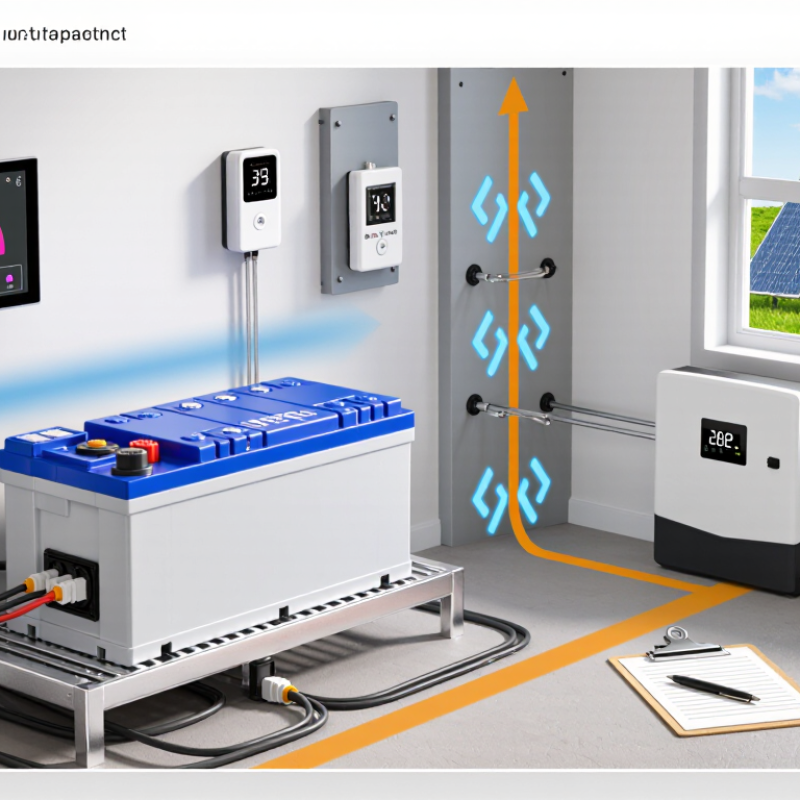
LiFePO4 solar batteries are widely used in China’s rooftops, villas, farms, and remote microgrids. Their lifespan depends on more than chemistry. The U.S. Department of Energy’s Energy Storage Grand Challenge Roadmap identifies temperature, charging control, depth of discharge, and operating cycles as major performance factors. IEA’s Batteries and Secure Energy Transitions report recorded over 40 GW of new battery storage capacity globally in 2023. China represented a major share of this expansion, making practical battery maintenance increasingly important.
Temperature matters. Keep the battery between 15°C and 30°C when possible. In southern China, shade, ventilation, and moisture control can prevent heat-related aging. Northern installations need insulation and low-temperature charging protection. Charging below freezing can permanently damage lithium cells. A battery management system should stop charging when sensors detect unsafe conditions.
Avoid using 100% of the stored energy every day. A moderate operating window, such as 10% to 90% state of charge, usually reduces stress, although site economics may require deeper cycling. NREL battery lifetime modeling shows that calendar aging continues even when a battery is rarely used. High charge levels and heat accelerate it. Monthly inspection should include terminal tightness, cable temperature, enclosure dust, and monitoring records. Small details matter.
I would not promise a fixed ten-year life. Real systems face uneven sunlight, poor ventilation, and imperfect settings. A conservative design often lasts longer than an optimistic specification sheet.
Choosing the right LiFePO4 battery begins with the solar system’s daily load, not the battery label. List essential appliances, their wattage, and running hours. Add a realistic reserve for cloudy weather. A 10 kWh battery may provide less usable energy after reserve settings and conversion losses.
Match the battery voltage with the inverter and charge controller. Check continuous output current, not only peak power. A refrigerator may start with a brief surge. The battery management system should protect against overcharging, deep discharge, overheating, and excessive current. In field installations, I also inspect cable size, terminals, ventilation, and enclosure protection. Small details matter.
Choose capacity based on usable energy and the recommended depth of discharge. Leaving a modest reserve can reduce stress during frequent cycling. Confirm the rated cycle life and the testing conditions behind that number. Temperature performance deserves attention, especially in unheated rooms. Charging below freezing can damage cells unless suitable protection is built in.
I once selected capacity from the daily average alone. That shortcut was wrong. Winter demand exposed the weakness. Review seasonal usage, future loads, warranty terms, safety certifications, and service support before buying. A technically impressive battery can still be unsuitable if installation guidance is unclear or replacement support is unavailable.
The chart uses common engineering planning values for LiFePO4 solar batteries. Shallower discharge generally increases cycle life, while deeper discharge provides more usable energy per cycle. Actual performance depends on cell quality, temperature, charge voltage, current, battery management settings, and system design.
Installing a LiFePO4 solar battery correctly begins with its location. Choose a dry, shaded area with stable temperatures and clear access. Avoid direct sunlight, standing water, and dusty rooms. The mounting surface must support the battery’s full weight. Leave space around terminals and ventilation openings. Keep it simple.
Before connecting cables, inspect the battery, inverter, charger, and solar controller. Their voltage ranges must match. Use correctly sized copper cables, secure lugs, and suitable overcurrent protection near the battery. Reverse polarity can cause serious damage. A qualified electrician should verify the system against local electrical requirements.
Configure the battery management system according to the manufacturer’s technical data, not guesswork. Set charging voltage, low-voltage cutoff, maximum current, and temperature limits carefully. Enable low-temperature charging protection when the battery may approach freezing. In a parallel system, use equal cable lengths and confirm balanced connections.
I have seen installations work initially but age unevenly because settings were copied from another battery. That shortcut is tempting, yet unreliable.
Record the final settings and test the system under controlled load. Check terminal tightness after several operating cycles. The battery should not heat excessively, swell, or produce unusual odors. Stop using it if these signs appear. Small mistakes matter.
LiFePO4 solar battery life depends heavily on charging discipline. Keep daily operation near 10–90% state of charge when possible. Set absorption voltage near 3.45–3.55 volts per cell, following the battery maker’s limits. A 16-cell, 51.2-volt pack then needs careful BMS coordination. Never override high-voltage protection. The U.S. Department of Energy’s Energy Storage Grand Challenge Roadmap identifies cycle life, efficiency, and safety as core storage metrics. NREL’s 2024 Annual Technology Baseline uses roughly 15 years as a representative stationary battery-life assumption, but that is not a promise.
Temperature control matters just as much. Keep the battery around 15–30°C during normal operation, and avoid charging below 0°C unless an approved heating system is active. A shaded, ventilated enclosure is better than a sealed metal box under direct sunlight. Leave space around the pack. Heat quietly accelerates aging. Discharge currents should remain within the continuous rating, especially during pump or inverter starts. Short peaks are acceptable only when the protection system allows them.
Small habits matter. Avoid storing the battery at 100% for weeks. A 40–60% storage level is usually gentler. Check monthly voltage, temperature, and abnormal cell imbalance. One weakness remains: users often trust displayed SOC too much. It can drift. Recalibration is sometimes necessary. IRENA’s electricity-storage cost analysis also shows why longer service life reduces total ownership cost, but real results still depend on installation quality.
China Top 10: How to Maximize LiFePO4 Solar Battery Life
Reliable battery care begins with accurate monitoring. Track state of charge, voltage, current, temperature, and alarm history. Do not estimate charge from voltage alone. LiFePO4 voltage remains unusually flat across much of its working range. A battery monitor or battery management system provides better evidence. Keep daily operation moderate, such as 10% to 90% state of charge, unless the manufacturer specifies another range. Avoid leaving the battery fully charged for weeks. Short-term full charging may be necessary for balancing, but constant saturation can increase aging. Small details matter.
Temperature control protects both safety and capacity. Never charge a frozen battery. Many systems should not charge below 0°C, unless approved heating or specific controls are installed. Keep the battery dry, shaded, and away from direct heat. Check terminals for looseness, corrosion, or discoloration every few months. Inspect cables for cracking and confirm that protective devices match the system design. Store an unused battery near 40% to 60% charge, then check it periodically. No schedule is perfect. Missed inspections happen, especially in remote solar installations. Record readings and maintenance dates so unusual changes become visible early. Use only a compatible charger, follow the installation manual, and have qualified personnel inspect wiring or internal faults. Never open battery cells yourself. Safety comes before saved time.
| No. | Life-Extension Practice | Recommended Operating Data | What to Monitor | Maintenance and Safety Action | Expected Benefit |
|---|---|---|---|---|---|
| 1 | Use a moderate state-of-charge range | Routine use: approximately 10%–90% SOC. Use 100% SOC only when additional stored energy is needed or for periodic cell balancing. |
Daily minimum and maximum SOC; time spent near 100% or near the low-voltage cutoff. | Avoid routinely discharging to the BMS shutdown point. Set the solar controller and inverter with conservative voltage limits approved for the battery system. | Reduces chemical stress and can improve cycle life compared with frequent full-depth cycling. |
| 2 | Prevent charging below freezing | Do not charge below 0°C / 32°F unless the battery includes a correctly controlled low-temperature heating system. Follow the battery maker’s stated limits. | Battery temperature before and during charging; low-temperature protection events. | Install the battery in an insulated, ventilated location. Configure the charger to stop charging when the low-temperature limit is reached. | Prevents lithium plating, which can permanently reduce capacity and create internal safety risks. |
| 3 | Control operating temperature | Preferred routine range: about 15°C–30°C / 59°F–86°F. Common operating limits vary by design; verify the battery documentation. |
Temperature at the battery terminals, enclosure, and hottest cell; temperature trends during high loads. | Keep batteries away from direct sunlight, radiators, exhaust heat, and poorly ventilated enclosures. Do not cool a wet battery with condensation. | Limits accelerated aging caused by sustained heat and improves charging and discharging efficiency. |
| 4 | Limit charge and discharge current | A conservative daily target is about 0.2C–0.5C. For a 100 Ah battery, this equals approximately 20–50 A. Never exceed the specified continuous or peak rating. |
Charge current, discharge current, inverter power, and BMS over-current events. | Match the solar controller, inverter, cabling, fuses, and battery rating. Reduce heavy loads when the battery is hot or nearly empty. | Reduces heat generation, voltage sag, and mechanical or electrical stress on cells and connections. |
| 5 | Configure the correct charging profile | For a typical 12 V nominal LiFePO4 system, absorption voltage is often around 14.0–14.4 V and float is commonly disabled or set lower; exact values depend on the battery and BMS. | Absorption voltage, absorption duration, float voltage, equalization setting, and charger temperature compensation. | Disable lead-acid equalization and sulfation modes. Use only voltage and timing values specified for the particular LiFePO4 battery system. | Prevents overvoltage, unnecessary high-SOC exposure, and incompatible charging behavior. |
| 6 | Monitor cell voltage, not only pack voltage | A 12 V LiFePO4 pack normally contains four series cells. Individual cell voltage and cell-to-cell difference are more informative than pack voltage alone. | Highest cell voltage, lowest cell voltage, voltage difference under charge and load, and repeated imbalance alarms. | Investigate persistent imbalance, sudden voltage changes, or early BMS cutoffs. Do not bypass the BMS to force a charge. | Identifies weak cells, wiring problems, and abnormal charging before they cause a complete system shutdown. |
| 7 | Perform periodic SOC calibration and balancing | Review the battery monitor every 1–3 months or when SOC readings become inaccurate. A controlled full charge may be needed for the BMS to resynchronize. | Displayed SOC versus measured amp-hours, full-charge detection, balance status, and accumulated charge/discharge data. | Use the battery’s approved balancing procedure. Avoid leaving the battery at 100% for extended periods solely for balancing. | Keeps energy readings accurate and helps the BMS maintain usable capacity across series-connected cells. |
| 8 | Store the battery at a moderate SOC | Recommended storage range: approximately 40%–60% SOC. For storage longer than one month, disconnect unnecessary loads and charging sources. |
SOC, open-circuit voltage, temperature, and any parasitic drain from inverters, displays, or communication devices. | Check the battery at least every 2–3 months. Recharge if SOC approaches the low-SOC limit, while observing temperature restrictions. | Reduces calendar aging and prevents deep self-discharge or protection shutdown during long periods without sunlight. |
| 9 | Inspect terminals, cables, and protection devices | Connections should be clean, dry, mechanically secure, and sized for the maximum expected current. Fuse and breaker ratings must match the system design. | Loose terminals, discoloration, corrosion, unusual heat, melted insulation, voltage drop, and repeated fuse or breaker operation. | De-energize the system before tightening or servicing. Use insulated tools and follow the installation torque specification; never work on exposed live terminals. | Prevents resistive heating, power loss, nuisance shutdowns, arcing, and potential fire hazards. |
| 10 | Use alarms and maintain a service log | Record daily or weekly SOC, voltage, current, temperature, energy throughput, cycle count, and BMS events. | Over-temperature, under-voltage, over-voltage, over-current, communication loss, and unexpected capacity decline. | Investigate repeated alarms instead of repeatedly resetting the BMS. Stop using the battery if it swells, leaks, emits an odor, becomes unusually hot, or shows physical damage. | Provides early warning of faults and supports safe, data-based maintenance decisions. |
| Important: Voltage limits, temperature limits, current ratings, balancing behavior, and BMS settings vary by battery construction and system design. Always prioritize the battery’s technical documentation and applicable electrical safety requirements over general guidance. | |||||
Choose a dry, shaded area with stable temperatures. Avoid sunlight, standing water, dust, and flooding. The surface must support the battery’s full weight. Leave clear space around terminals and vents.
Check the inverter, charger, solar controller, and battery voltage ranges. Use correctly sized copper cables and secure cable lugs. Install suitable overcurrent protection near the battery. Polarity mistakes can cause serious damage.
Follow the battery’s technical data, not copied settings. Set charging voltage, maximum current, low-voltage cutoff, and temperature limits carefully. Record the final settings. Guesswork is tempting, but unreliable.
Use equal cable lengths for each battery connection. Confirm that positive and negative paths are balanced. Unequal cables can make batteries age differently. The system may work at first, then drift.
Keep daily operation near 10–90% state of charge when practical. An absorption range near 3.45–3.55 volts per cell may be suitable. Always follow the battery’s stated limits. Never disable high-voltage protection.
Normal operation is best around 15–30°C. Avoid charging below 0°C unless an approved heating system is active. Use shade and ventilation. Heat quietly accelerates aging.
Store it near 40–60% charge when possible. Avoid leaving it at 100% for weeks. Keep the area dry and moderately cool. A storage routine is helpful, though not perfect.
Check voltage, temperature, and cell balance monthly. Test the system under a controlled load. Inspect terminal tightness after several operating cycles. Displayed state of charge can drift, so recalibration may sometimes help.
Stop using the battery if it becomes excessively hot, swells, or produces unusual odors. Do not continue testing a damaged unit. Ask a qualified electrician to inspect the system. Small mistakes matter.
This guide explains how to maximize the lifespan of lifepo4 solar batteries by focusing on proper selection, installation, configuration, and daily operation. It introduces the basic characteristics of LiFePO4 technology and examines key factors that affect service life in solar energy systems in China, including battery capacity, discharge depth, charging habits, system load, and environmental conditions. Readers will learn how to match battery specifications with solar generation and household or commercial energy needs while avoiding unsuitable operating conditions.
The article also covers correct wiring, inverter and charge-controller settings, balanced charging, controlled discharge, and temperature management. Regular monitoring of voltage, state of charge, temperature, and system performance can help identify problems early. With appropriate maintenance, ventilation, safety inspections, and careful energy management, users can reduce unnecessary stress on the battery, improve system reliability, and achieve a longer, safer, and more cost-effective service life.

Hudd Energy