Choosing safe commercial energy storage in China requires more than comparing battery prices or container capacity. Buyers must understand what safety certificates are required for commercial energy storage before approving a project. The answer depends on battery chemistry, system design, installation location, grid connection, and local enforcement. A certificate is not always the same as a test report. That distinction matters.
For many projects, UL 9540 supports system-level safety evaluation, while UL 9540A examines thermal runaway and fire-propagation behavior. IEC 62619 may apply to industrial lithium batteries, and IEC 62933 can support broader energy-storage safety assessment. China-focused projects may also require GB or GB/T compliance, CCC certification where applicable, and local fire-protection acceptance. Requirements can change by province and application. Confirm them with the authority having jurisdiction.
Imre Gyuk, a respected energy-storage specialist at the U.S. Department of Energy, said, “Energy storage is the key to unlocking the full value of renewable energy.” His point remains practical. Storage only creates value when it operates safely under real conditions. Engineers should inspect spacing, ventilation, smoke detection, emergency shutdowns, fire suppression, and battery-management records. A hot aisle, damaged cable, or blocked exhaust path can reveal more than a polished certificate folder.
No single certificate proves that every installation is safe. That is an uncomfortable limitation. Procurement teams should verify certificate scope, testing laboratory accreditation, product configuration, and inspection status. They should also request installation experience from comparable commercial sites. Strong documentation reduces risk, but disciplined commissioning and continuous monitoring complete the safety argument.
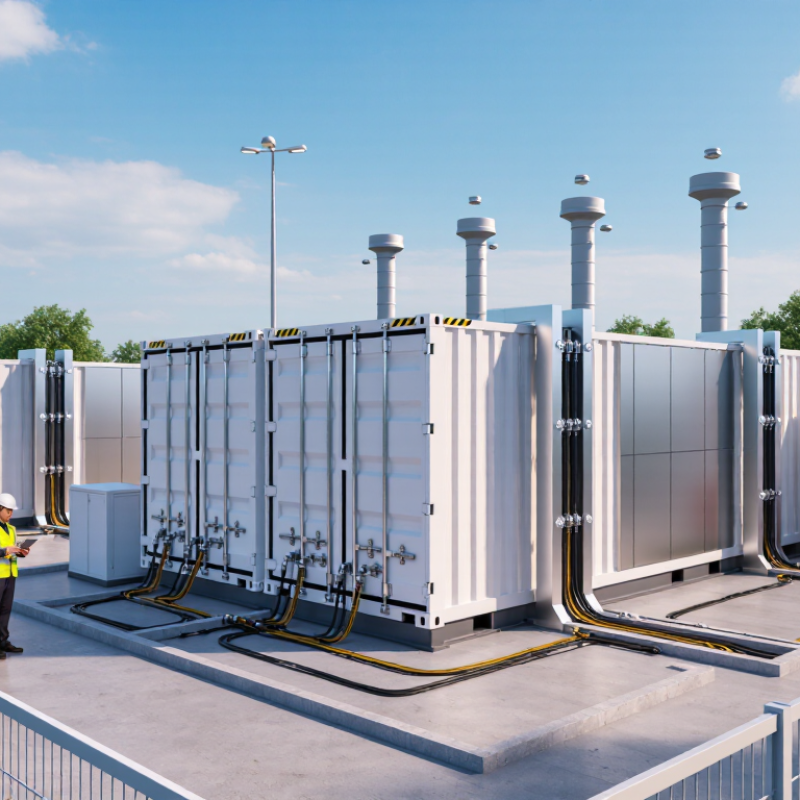
China’s commercial energy storage market is expanding quickly. CNESA’s 2024 market review reported strong growth in China’s new energy storage installations. Safety certificates now matter more during procurement, grid connection, and insurance reviews.
The core reference is GB/T 36276, covering lithium-ion batteries for electrical energy storage. Battery management systems should align with GB/T 34131. For complete electrochemical storage stations, GB/T 42288 addresses safety requirements. Grid-connected projects should also review GB/T 36547 and GB/T 36548, which cover connection and testing procedures. These are Chinese standards, not always standalone “certificates.” This distinction is often misunderstood.
International transport may require UN 38.3 testing. Export-oriented projects may also request IEC 62619, UL 9540, or UL 9540A evidence, depending on the destination and contract. These documents do not replace Chinese project approvals. IEA’s Batteries and Secure Energy Transitions report says global battery storage capacity must expand sixfold by 2030. That pressure makes verification more important, but paperwork alone cannot prove safe operation.
Tips: Request the full test report, certificate scope, model number, and expiry status. Check whether the report covers the installed cell, battery cabinet, PCS, and fire system. A certificate for one component may not cover the whole system. Also review thermal runaway testing, emergency shutdown procedures, and maintenance records. The boundary between compliance and actual site safety still deserves careful review.
| No. | Safety Area | Applicable Chinese Standard, Certificate or Approval | Typical Status | What It Covers | Common Compliance Evidence |
|---|---|---|---|---|---|
| 1 | Lithium-Ion Battery Safety | GB/T 36276 — Lithium-Ion Batteries for Electrical Energy Storage | Technical Standard | Cell, module and battery-system safety and performance requirements for stationary electrical energy storage applications, including electrical, mechanical, environmental and abuse testing. | Third-party test report, factory quality records, cell and module test data, design documentation and traceability records. |
| 2 | Battery Management System | GB/T 34131 — Technical Requirements for Battery Management System Used in Electrochemical Energy Storage | Technical Standard | Battery monitoring, state estimation, protection functions, communication, alarms, fault handling and operating limits of the battery management system. | BMS functional test report, protection-setting records, communication test results, alarm verification and software configuration records. |
| 3 | Complete Electrochemical Storage System | GB/T 36558 — General Technical Requirements for Electrochemical Energy Storage System | Technical Standard | System-level requirements for operating conditions, electrical performance, protection, control, monitoring, communication and system testing. | Complete-system test report, factory acceptance test records, protection coordination documents and commissioning records. |
| 4 | Power Station Safety | GB/T 42288 — Safety Regulations for Electrochemical Energy Storage Power Stations | Safety Standard | Safety management, equipment protection, operation, maintenance, emergency response, inspection and risk control for electrochemical energy storage power stations. | Safety management plan, operating procedures, emergency drills, inspection records, maintenance logs and hazard-control documentation. |
| 5 | Fire Protection Design | GB 55037 — General Code for Building Fire Protection and Prevention | Mandatory Code | Mandatory building fire-protection principles, fire separation, evacuation, fire-fighting access and related life-safety requirements applicable to the project. | Fire-protection design documents, qualified design review, construction inspection records and acceptance documentation. |
| 6 | Building and Fire Compartmentation | GB 50016 — Code for Fire Protection Design of Buildings and Structures | Mandatory Code | Fire-resistance ratings, fire compartments, separation distances, fire doors, evacuation routes and access requirements, subject to the project type and applicable revisions. | Approved fire engineering drawings, material fire-rating documents, construction inspection records and local fire acceptance documents where required. |
| 7 | Energy Storage Station Design | GB/T 51048 — Code for Design of Electrochemical Energy Storage Power Stations | Project Requirement | Site selection, layout, electrical design, battery rooms or containers, ventilation, thermal management, fire protection, monitoring and auxiliary systems. | Engineering design package, hazard assessment, fire-protection calculation, equipment schedules and design-review records. |
| 8 | Grid Connection | GB/T 36547 — Connection Technical Requirements for Electrochemical Energy Storage System Access to the Power Grid | Grid Requirement | Voltage, frequency, active and reactive power control, power quality, protection, communication and abnormal-grid operating requirements for grid-connected systems. | Grid-connection test report, relay-protection settings, power-quality test results, communication test and grid-operator acceptance records. |
| 9 | Electrical Safety and Installation | Applicable low-voltage, high-voltage, grounding, cable, switchgear and electrical-installation standards | Project-Dependent | Protection against electric shock, short circuit, overcurrent, insulation failure, grounding faults, arc hazards and improper installation. | Electrical single-line diagrams, insulation and withstand-voltage tests, grounding test reports, protection coordination and commissioning records. |
| 10 | Fire Detection and Suppression | Applicable standards for automatic fire alarm, gas detection, smoke and temperature detection, ventilation and fire-suppression systems | Project-Dependent | Early detection of thermal events, alarm transmission, ventilation control, emergency shutdown and suppression arrangements suitable for the battery technology and installation environment. | System inspection report, detector calibration records, suppression-system commissioning report, linkage test and emergency-response procedure. |
| 11 | Compulsory Product Certification | China Compulsory Certification (CCC), only when the specific product or component is included in the applicable CCC catalogue | Catalogue-Dependent | CCC is not automatically required for every commercial stationary energy storage system. It may apply to certain electrical products, components or use cases listed in the current compulsory-certification catalogue. | Valid CCC certificate and certification-mark records for covered products; catalogue applicability confirmation for products outside the scope. |
| 12 | Voluntary Safety Certification | Voluntary product or system certification based on applicable Chinese standards and certification rules | Market or Tender Requirement | Independent confirmation of product or system conformity where a developer, investor, insurer, financier or tender document requests certification beyond mandatory legal requirements. | Certificate issued by an accredited certification body, certification scope, surveillance records and supporting test reports. |
| 13 | Transportation of Lithium Batteries | UN 38.3 testing and applicable Chinese dangerous-goods transport requirements | Transport-Dependent | Mechanical, altitude, temperature, vibration, shock, external short-circuit, impact and overcharge tests for lithium battery cells and batteries transported by air, sea, rail or road as applicable. | UN 38.3 test summary, transport packaging records, safety data documentation and dangerous-goods transport documentation. |
| 14 | Environmental and Occupational Safety | Environmental impact, occupational health, hazardous-materials and emergency-management requirements applicable to the project location | Local Approval | Environmental risks, chemical exposure, noise, waste batteries, emergency planning, worker protection and local construction or operating permits. | Environmental assessment or filing, occupational safety assessment, hazardous-materials procedures, emergency plan and local authority records. |
No. Battery, inverter, system, building, fire, and grid requirements are assessed separately.
They examine cells, modules, enclosures, protection circuits, insulation, and abnormal operating conditions.
No. It does not cover every inverter, control, cooling, fire, or communication arrangement.
It evaluates electrical isolation, grounding, surge protection, grid connection, and abnormal operating responses.
Reviewers may inspect fire compartments, smoke detectors, ventilation, cable routes, and emergency isolation access.
Request the certificate, test report, certification scope, factory audit details, and delivered model information.
No. It supports approval, but site conditions can create risks that testing did not cover.
Record every revision and check whether changes affect the certified configuration. Documents can lag behind reality.
It should connect cell data, module tests, system tests, fire design, grid studies, commissioning, and site acceptance.
Rapid deployment increases documentation risks. One missing record can weaken the safety chain.
Choosing the right safety certificates is essential when planning a commercial energy storage project in China. The question of what safety certificates are required for commercial energy storage depends on the system’s battery technology, inverter configuration, installation environment, project capacity, and intended market. Chinese standards typically address electrical safety, battery performance, fire prevention, electromagnetic compatibility, transportation, and grid connection. Projects may also need local testing reports, product compliance documents, and site-specific approval materials.
Certification requirements differ across the main components. Batteries are evaluated for cell safety, thermal behavior, electrical performance, and transport compliance, while inverters are assessed for electrical protection, grid interaction, and electromagnetic compatibility. The complete energy storage system may require additional testing for fire safety, control functions, emergency shutdown, and system-level operation. Before procurement, project owners should verify certificate numbers, issuing laboratories, validity periods, test standards, and whether the documents match the exact model and configuration. This process helps reduce approval delays, improve operational safety, and support reliable project acceptance.

 Hudd Energy